4.2. MODELING THE ECOLOGY OF A NATURAL RESERVE
A simulation model with Vensim
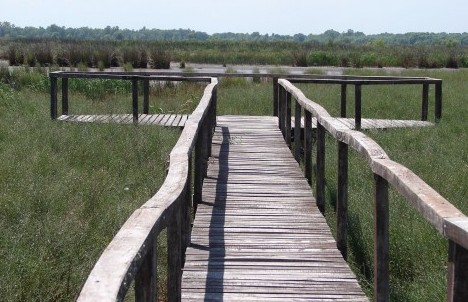 The Kaibab Plateau is a large, flat area of land located on the northern rim of the Grand Canyon. It has an area of about 1,000,000 acres. In 1907, President Theodore Roosevelt created the Grand Canyon National Game Preserve, which included the Kaibab Plateau. Deer hunting was prohibited. At the same time, a bounty was established to encourage the hunting of mountain lions and other natural deer predators. In 1910 nearly 500 mountain lions were trapped or shot. As a result of the extermination of the Kaibab mountain lions and other natural enemies of the deer, the deer population began to grow quite rapidly. The deer herd increased from about 5,000 in 1907 to nearly 50,000 in 15 years.
As the deer population grew, Forest Service officials and other observers began to warn that the deer would exhaust the food supply on the plateau. Over the winters of 1924 and 1925, nearly 60 percent of the deer population on the plateau died. The deer population on the Kaibab continued to decline over the next fifteen years, and it finally stabilized at about 10,000 in 1940.
Imagine you were an official of the National Forest Service in 1930, and you were interested in the fate of the deer population on the Kaibab Plateau. To examine some alternative approaches to the problem, you have decided to build a simulation model. Your main concern is the growth and rapid decline of the deer population observed over the period from 1900 to 1930, and the future course of the population from 1930 to 1950. Thus the time frame for the model you will build is the fifty years from 1900 to 1950, and the problematic behavior (reference mode) is the behavior of deer population.
Once you have developed an adequate model, you can use it to examine some alternative ways of controlling the size of the deer population on the plateau.
In building a model, it is often helpful to begin with a simple model and then expand it in several steps. We will start with a small model focusing on a few of the factors that influenced the size of the deer population on the Kaibab Plateau. Later, the model will be enlarged to include additional elements of the plateau ecology, and finally obtain a model that generates the behaviour.
The Kaibab Plateau is a large, flat area of land located on the northern rim of the Grand Canyon. It has an area of about 1,000,000 acres. In 1907, President Theodore Roosevelt created the Grand Canyon National Game Preserve, which included the Kaibab Plateau. Deer hunting was prohibited. At the same time, a bounty was established to encourage the hunting of mountain lions and other natural deer predators. In 1910 nearly 500 mountain lions were trapped or shot. As a result of the extermination of the Kaibab mountain lions and other natural enemies of the deer, the deer population began to grow quite rapidly. The deer herd increased from about 5,000 in 1907 to nearly 50,000 in 15 years.
As the deer population grew, Forest Service officials and other observers began to warn that the deer would exhaust the food supply on the plateau. Over the winters of 1924 and 1925, nearly 60 percent of the deer population on the plateau died. The deer population on the Kaibab continued to decline over the next fifteen years, and it finally stabilized at about 10,000 in 1940.
Imagine you were an official of the National Forest Service in 1930, and you were interested in the fate of the deer population on the Kaibab Plateau. To examine some alternative approaches to the problem, you have decided to build a simulation model. Your main concern is the growth and rapid decline of the deer population observed over the period from 1900 to 1930, and the future course of the population from 1930 to 1950. Thus the time frame for the model you will build is the fifty years from 1900 to 1950, and the problematic behavior (reference mode) is the behavior of deer population.
Once you have developed an adequate model, you can use it to examine some alternative ways of controlling the size of the deer population on the plateau.
In building a model, it is often helpful to begin with a simple model and then expand it in several steps. We will start with a small model focusing on a few of the factors that influenced the size of the deer population on the Kaibab Plateau. Later, the model will be enlarged to include additional elements of the plateau ecology, and finally obtain a model that generates the behaviour.
|

 See the book